
When people evaluate Paint Protection Film (PPF) or Window Films, they usually look at obvious things: thickness, self-healing, warranty years, UV protection, or price. But there’s one metric that almost no one talks about — yet it’s the single biggest difference between a premium film and an average film:
Not initial gloss.
Not “how shiny it looks on day one.”
But how well that shine survives real life.
Gloss retention is what separates films that look stunning for years from films that look dull, hazy, or tired after a few months.
What is Gloss Retention?
Gloss retention is the ability of a film to maintain its original surface shine over time, despite exposure to:
- UV radiation
- Heat and thermal cycling
- Washing and wiping
- Dust, sand, pollution
- Chemicals and hard water
A film with high gloss retention will look almost as good in year 3 or 5 as it did on day 1.
A film with poor gloss retention will slowly:
- Lose reflectivity
- Develop micro-haze
- Look “washed out”
- Reduce depth of color
And once gloss is gone — it never comes back.
Why Initial Gloss Means Nothing?
Most films look glossy when they’re new.
Even cheap films can look impressive:
- Right after installation
- Under studio lighting
- On social media reels
But the real test starts after:
- 6 months of sunlight
- 20+ washes
- Daily driving
- Environmental exposure
This is why initial gloss is marketing,
but gloss retention is engineering.
The Science Behind Gloss Retention
Gloss is not magic — it’s physics and material science.
It depends on three critical layers:
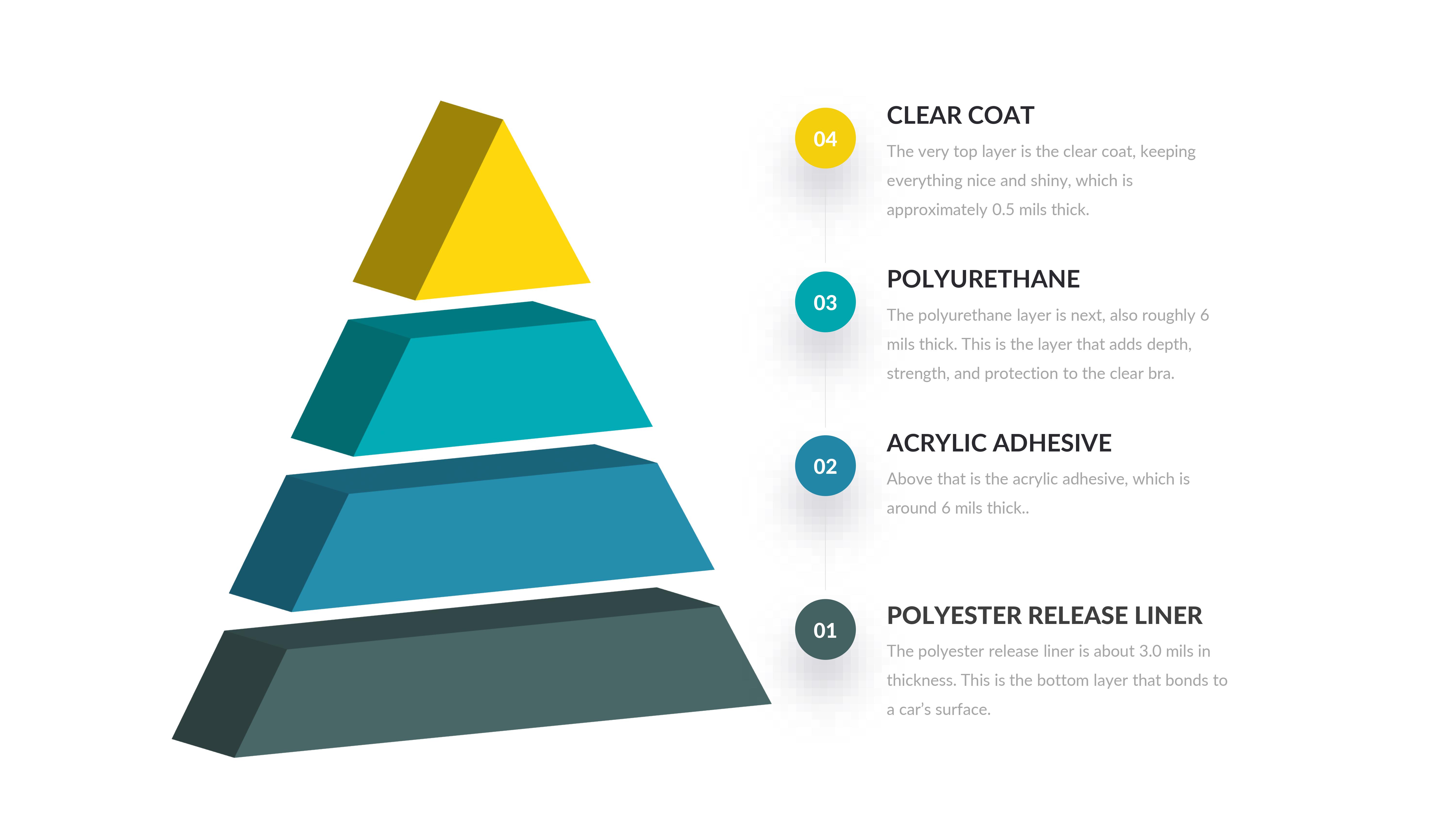

1. Top Coat Chemistry
The top coat is the outermost layer you touch.
Premium films use:
- Advanced elastomeric coatings
- Nano-ceramic infused layers
- UV-stable polymers
Low-grade films use:
- Basic polyurethane
- Cheap clear coats
- Minimal UV stabilizers
Over time:
- Cheap top coats oxidize
- Premium top coats resist degradation
2. Surface Smoothness (Microscopic Level)
Gloss is literally about how smooth the surface is at a microscopic scale.
Smoother surface =
More uniform light reflection =
Higher perceived gloss.
Poor films develop:
- Micro scratches
- Surface waviness
- Light scattering
Which creates:
- Haze
- Dullness
- Loss of depth
3. UV Stability
UV is the biggest gloss killer on Earth.
Sunlight causes:
- Polymer breakdown
- Oxidation
- Yellowing
- Surface chalking
Premium films contain:
- UV absorbers
- UV stabilizers
- Heat-resistant polymers
Budget films simply burn slowly under the sun.
How Gloss Retention is Actually Measured?
In laboratories, gloss is measured using a gloss meter.
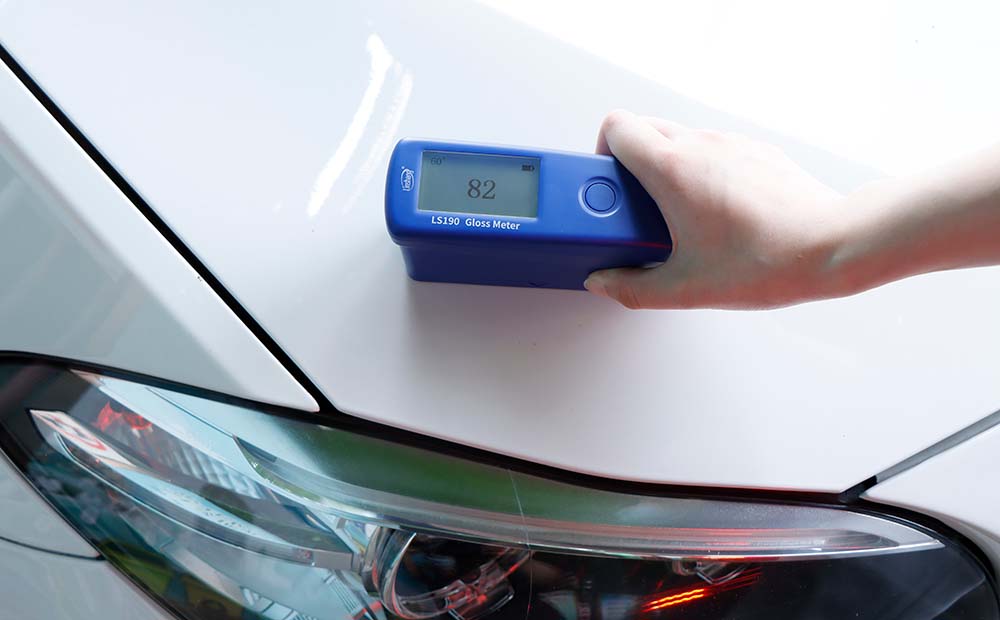
The device measures light reflection at specific angles:
- 20° (high-gloss surfaces)
- 60° (standard measurement)
- 85° (matte surfaces)
Over time, engineers track:
- Initial gloss value
- Gloss after UV exposure
- Gloss after abrasion cycles
- Gloss after chemical exposure
The percentage retained = Gloss Retention Score.
Why Cheap Films Lose Gloss Fast?
Low-quality films fail in predictable ways:
1. Polymer Degradation: Cheap TPU or PVC breaks down under heat and UV.
2. Oxidation: Surface reacts with oxygen → dull finish.
3. Micro-Abrasion: Washing, wiping, dust create microscopic scratches.
4. Chemical Damage: Shampoos, detergents, water spots attack weak coatings.
Result:
Your film still exists,
but your car no longer looks premium.
Gloss Retention vs Thickness (The Big Misconception)
Most buyers think:
“Thicker film = better film”
Reality:
Thickness has almost nothing to do with gloss retention.
A thick but poorly engineered film will:
- Protect from stone chips
- But still look dull over time
A well-engineered thinner film can:
- Stay glossy for years
- Maintain showroom finish
- Look visually superior
Optical performance beats physical thickness.
Why Gloss Retention Matters More Than Self-Healing?
Self-healing fixes:
- Light scratches
- Swirl marks
But it cannot fix:
- Oxidation
- Yellowing
- Surface haze
- Polymer aging
Once gloss is gone:
No heat gun.
No polish.
No ceramic.
No magic.
The film has aged.
Gloss Retention = Brand Quality Indicator
In the PPF industry, gloss retention is the real fingerprint of engineering quality.
High gloss retention indicates:
- Advanced R&D
- Better raw materials
- Proper UV chemistry
- Long-term testing
- Real quality control
Low gloss retention indicates:
- Private-label manufacturing
- Cost-cutting polymers
- Minimal testing
- Marketing over engineering
This is why premium brands talk about:
- Optical clarity
- UV stability
- Top coat technology
And budget brands talk about:
- Discounts
- Thickness
- “Same as X brand”
Real-World Impact on Luxury Cars
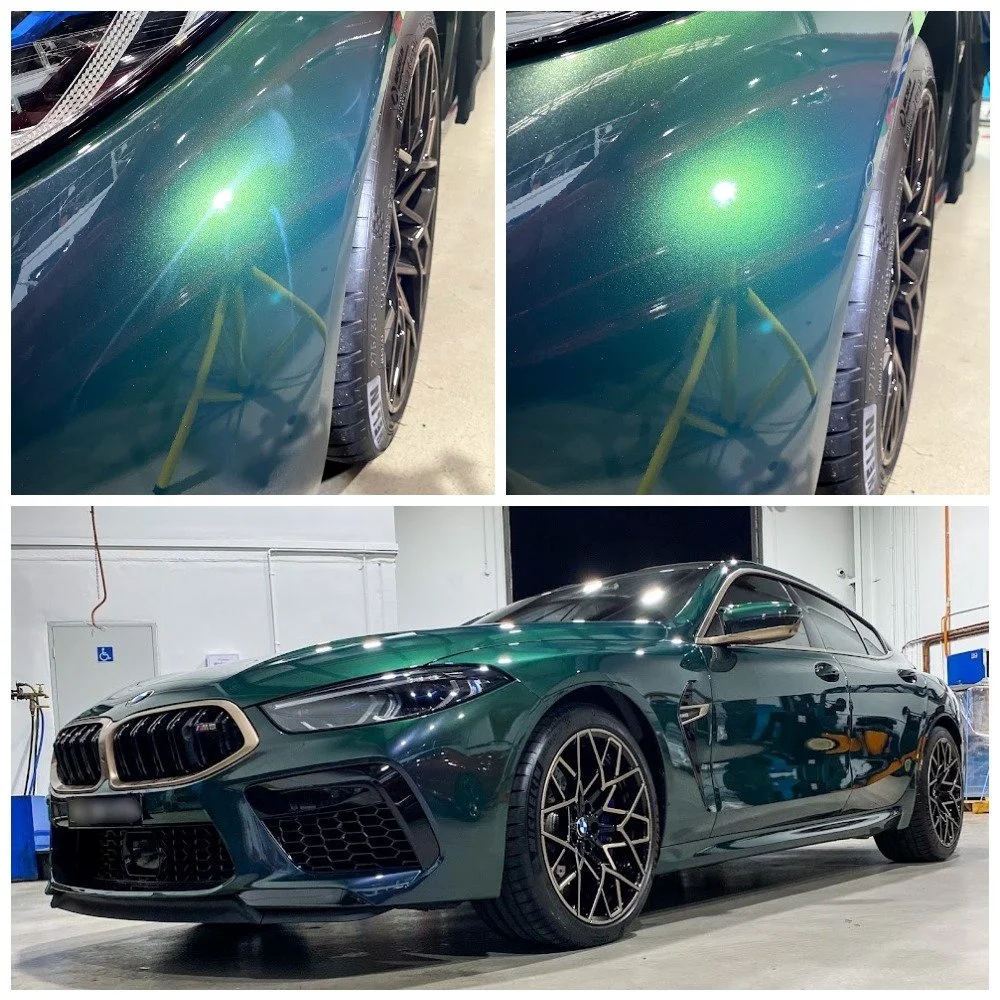
On dark cars:
- Gloss loss is instantly visible
- Paint looks flat
- Reflections become blurry
On light cars:
- Depth reduces
- Surface looks plastic
- Premium feel disappears
In both cases:
The car still works.
But it no longer feels expensive.
Concluding Thoughts
Stone chip resistance is protection. Self-healing is convenience. Thickness is durability.
But gloss retention is perception.
It decides whether your car:
- Looks premium or average
- Feels new or old
- Feels expensive or ordinary
And in luxury — perception is everything.
You don’t buy PPF to just protect paint. You buy it to preserve the emotion of a new car. Gloss retention is the metric that decides whether that emotion survives… or fades.